2026 Best Plywood Furniture for Long Term Use?

Time:2026-10-05 Author:Oliver
0%

In 2026, plywood furniture is gaining attention for its clean appearance and dependable structure. Its appeal is practical, not merely fashionable. Cross-layered sheets can resist splitting better than many solid wood boards. They also offer stable surfaces for desks, wardrobes, shelving, and dining tables. Yet quality varies sharply between manufacturers and product ranges. A cabinet with thick birch plywood may remain firm for decades. A cheaper panel can swell after one leaking plant pot. These details matter.

Are plywood furniture pieces durable for long-term use? The honest answer depends on construction, materials, and daily care. Furniture-grade plywood, sealed edges, strong joints, and moisture-resistant finishes usually support longer service. Weak screws, thin veneers, and exposed end grain can create early problems. I have seen well-built plywood shelves carry heavy books for years without sagging. I have also seen attractive units loosen because their fasteners were poorly positioned. That contrast is easy to miss online.

This guide examines the best plywood furniture for long-term use in 2026. It considers plywood grades, core thickness, joinery, surface treatments, repairability, and manufacturer transparency. Reputable brands should identify wood sources, panel composition, and indoor emissions testing. Certifications can help, but they do not replace careful inspection. Look closely at corners, drawer runners, back panels, and underside protection. Small flaws often become expensive failures. Still, no material is perfect. Even premium plywood needs sensible weight limits, dry conditions, and occasional maintenance. The strongest choice is not always the most expensive one.
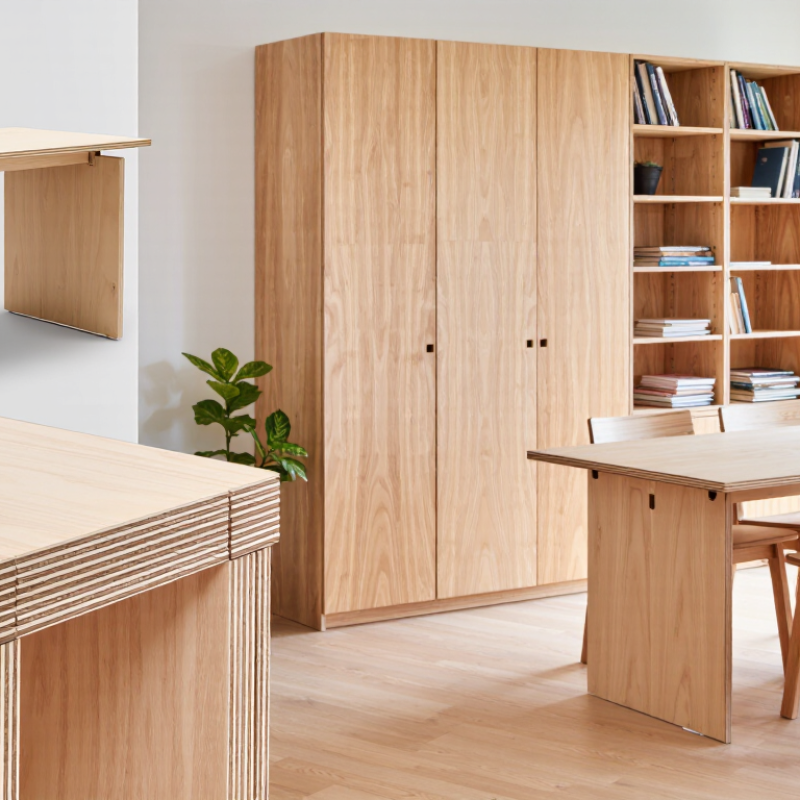
2026 Best Plywood Furniture for Long Term Use?

Plywood Grades Explained: HP-1, EN 636, and Structural Performance Data

Choosing plywood furniture for long-term use requires more than a smooth surface. HP-1 is not a universal European classification. Its meaning can vary by country, supplier, or project specification. Request the full standard reference, veneer species, thickness, and test certificate. A label alone is weak evidence.

EN 636 provides a clearer framework. EN 636-1 covers dry conditions, EN 636-2 covers humid interiors, and EN 636-3 addresses exterior exposure. The standard separates intended moisture environments, not furniture quality by itself. EN 12369-2 supplies characteristic strength and stiffness values for structural plywood. These values depend on thickness, construction, and loading direction. A 15 mm panel may feel rigid across its face but flex noticeably along a long shelf.

The USDA Forest Products Laboratory Wood Handbook reports that plywood performance changes with veneer direction, density, moisture, and connection design. That matters at the joints. Screws near an edge can split thin plies, especially after repeated assembly. I have seen a well-finished cabinet fail at its hinge side, not its panel center. That was a useful mistake. For a wardrobe shelf, check bending stiffness, screw withdrawal data, edge sealing, and the declared EN 636 class. Do not compare HP-1 with EN 636 as if they were equivalent grades. They describe different classification systems. Load testing in the actual furniture design remains the most dependable check.

Core Thickness and Ply Counts: How 18-mm, 9-Ply Panels Improve Durability

For furniture designed to last into 2026 and beyond, core thickness matters more than appearance alone. An 18-mm plywood panel is about 12.5% thicker than a 16-mm panel. It also provides better screw engagement and greater resistance to bending under loaded shelves.

A 9-ply structure contains nine veneer layers and eight glue lines. Cross-oriented layers help spread stress across the panel, reducing localized splitting around hinges, dowels, and fasteners. The USDA Forest Products Laboratory’s Wood Handbook reports that indoor wood products commonly stabilize near 6–8% moisture content. However, repeated moisture changes can still cause swelling, shrinkage, and edge damage. Plywood quality also depends on veneer grading, adhesive bonding, and balanced construction. Nine plies are not magic. A poorly bonded panel can fail earlier than a well-made panel with fewer layers. That is an easy detail to overlook.

Tips: Inspect the cut edge before buying. Look for tight, even plies without gaps or dark glue voids. Keep furniture away from wet floors and unsealed walls. Seal exposed edges, especially beneath desks and inside cabinets. The Wood Handbook also explains that moisture movement drives dimensional change, so stable room conditions matter. I would still test a sample joint before producing a full cabinet. A small screw pull-out test can reveal weak cores faster than appearance can.

Adhesive and Emissions Standards: TSCA Title VI and CARB Phase 2

2026 Best Plywood Furniture for Long Term Use?

For long-term plywood furniture, adhesive compliance matters as much as board thickness. TSCA Title VI and CARB Phase 2 regulate formaldehyde emissions from composite wood panels. Their limits are strict: 0.05 ppm for hardwood plywood, 0.09 ppm for particleboard, and 0.11 ppm for medium-density fiberboard. Thin MDF has a 0.13 ppm limit. These figures come from the U.S. Environmental Protection Agency’s TSCA Title VI Compliance Guide and California Air Resources Board ATCM Phase 2 requirements.

Look for panels marked TSCA Title VI compliant, with clear producer information and certification records. A reliable supplier should provide recent test documentation, not only a sales statement. On a cabinet inspection, I would check the exposed edge, rear panel, and unfinished drilling points. A strong veneer cannot hide a poorly controlled core. It can smell sharp in a closed room.

Ventilation still matters.

Compliance does not mean zero emissions. Temperature, humidity, cutting, and aging can change indoor levels. The EPA notes that formaldehyde release generally increases with heat and humidity. I would avoid furniture with a persistent chemical odor, even when paperwork appears complete. This is an imperfect screening method, but it catches problems that a specification sheet may miss. EPA TSCA Title VI Compliance Guide, 2024; CARB ATCM Phase 2, Section 93120.

2026 Best Plywood Furniture for Long-Term Use: Adhesive and Emissions Standards

Maximum formaldehyde emission limits for composite wood panels under TSCA Title VI and CARB Phase 2. Lower values indicate stricter emissions performance.

Hardwood plywood used in furniture is limited to 0.05 ppm under both standards. The limits shown are regulatory maximums, not measurements of a specific product. Proper sealing, ventilation, and certified compliant materials can support long-term indoor use.

Best Plywood Furniture by Use: Birch, Oak, Marine, and Hardwood Panels

2026 Best Plywood Furniture for Long Term Use

Birch plywood offers a clean, stable foundation for desks, cabinets, and shelving. Its fine layers hold screws well and create smooth edges after sanding. In my workshop, birch panels stayed flatter than cheaper softwood sheets during seasonal changes. They still need sealed edges. Moisture finds weaknesses quickly.

Oak plywood suits dining tables, wardrobes, and visible storage furniture. Its harder face resists everyday scratches, while the grain adds warmth without heavy decoration. Choose thick panels for long shelves, especially when books or cookware create constant pressure. Oak looks durable, but unsupported spans can still bend.

Marine plywood works well for laundry rooms, bathroom storage, and covered outdoor furniture. Its waterproof adhesive improves reliability, yet the panel is not automatically waterproof. Every cut edge needs careful sealing. I learned this after a neglected cabinet corner darkened and swelled. A small oversight.

Hardwood panels provide strength for bed frames, workbenches, and heavily used seats. Their density supports repeated fastening and sanding, although heavier furniture becomes harder to move. Check the panel’s core, adhesive quality, and emission documentation before buying. Labels can be confusing. Ask for test information when possible. Furniture lasts longer when design, finish, and maintenance match the room’s actual conditions.

Service-Life Factors: Moisture, Joint Strength, Load Ratings, and Maintenance

2026 Best Plywood Furniture for Long Term Use?

For long-term plywood furniture, service life begins with moisture control. Furniture near kitchens, bathrooms, or open windows needs sealed edges, not only coated faces. I inspect the underside of panels, where damp floors often leave dark swelling first. Small gaps matter. Keep pieces raised on dry, level feet, and wipe spills before they reach joints. A humid room can quietly weaken a cabinet over several seasons.

Joint strength depends on design, fit, and fastener placement. Confirm that screws have adequate edge distance and that panels are not splitting. Dowelled, screwed, or reinforced joints should feel rigid without creaking during normal movement. Do not treat a thick panel as proof of safety. Load ratings should come from tested furniture data, with support spacing and use conditions clearly stated. Books, stoneware, and drawers create different stresses. When no rating exists, reduce the load and watch for sagging.

Maintenance is simple, but consistency is harder. Every few months, tighten accessible hardware and check bubbling veneer, loose joints, or hairline cracks. Use a barely damp cloth, then dry the surface fully. Aggressive cleaners can dull finishes and expose vulnerable edges. I have seen a sturdy-looking shelf fail because one rear corner stayed against a wet wall. That mistake was preventable. Still, inspections are imperfect; hidden moisture and overloaded drawers can escape notice. Record changes with photos, especially when furniture serves children, offices, or heavy storage.

FAQS

Why do adhesive emissions matter in plywood furniture?

Composite wood adhesives can release formaldehyde indoors. Compliance reduces emissions, but it does not mean zero emissions. Ventilation still matters.

Which emission limits apply to common plywood-related panels?

Hardwood plywood has a 0.05 ppm limit. Particleboard has a 0.09 ppm limit. MDF has a 0.11 ppm limit. Thin MDF has a 0.13 ppm limit.

What documents should I request before buying furniture?

Look for TSCA Title VI or CARB Phase 2 compliance information. Ask for recent test records and clear producer details. A sales statement alone feels insufficient.

Where should I inspect a plywood cabinet?

Check the exposed edge, rear panel, and unfinished drilling points. A strong surface veneer cannot hide a weak core. A sharp smell in a closed room deserves caution.

Which plywood type suits desks, cabinets, and shelves?

Birch plywood offers smooth edges and good screw-holding strength. Oak plywood adds visible grain and resists everyday scratches. Thick panels still need support.

Is marine plywood waterproof?

No. Its adhesive improves moisture resistance, but cut edges still require sealing. One dark, swollen corner can expose a small maintenance mistake.

How can I prevent moisture damage?

Seal panel edges, especially near kitchens, bathrooms, and windows. Keep furniture on dry, level feet. Wipe spills before they reach joints.

How do I judge shelf load safety?

Check tested load data, support spacing, and intended use. Books and cookware create different stresses. Without a rating, reduce the load and watch for sagging.

What maintenance helps plywood furniture last longer?

Tighten accessible hardware every few months. Look for bubbling veneer, loose joints, and hairline cracks. Use a barely damp cloth, then dry everything.

Are visual checks completely reliable?

No. Hidden moisture, overloaded drawers, and changing humidity can escape notice. Photograph changes over time. I would still treat inspections as imperfect.

Conclusion

Are plywood furniture pieces durable for long-term use? Yes, when the panels are properly graded, constructed, and maintained. This guide explains how classifications such as HP-1 and EN 636 relate to panel quality, moisture resistance, and structural performance. It also examines why 18-mm, 9-ply sheets can provide greater stability, screw-holding strength, and resistance to warping than thinner or lower-ply materials. Adhesive safety and indoor-air requirements, including TSCA Title VI and CARB Phase 2 emissions standards, are also important when choosing furniture for homes and workplaces.

Different plywood types suit different applications: birch offers a smooth, stable surface, oak provides a decorative hardwood appearance, marine plywood performs better in damp environments, and other hardwood panels can support demanding structural uses. Ultimately, service life depends on moisture exposure, joint design, load ratings, edge protection, and routine maintenance. Selecting the right panel for its environment and assembling it with strong, accurately fitted joints can help plywood furniture remain safe, stable, and attractive for many years.

Oliver

Oliver

Oliver is a seasoned marketing professional with a wealth of expertise in driving brand awareness and engagement. With a deep understanding of our company's product offerings, he consistently delivers high-quality content that enriches our professional blog. His insights not only shed light on......